
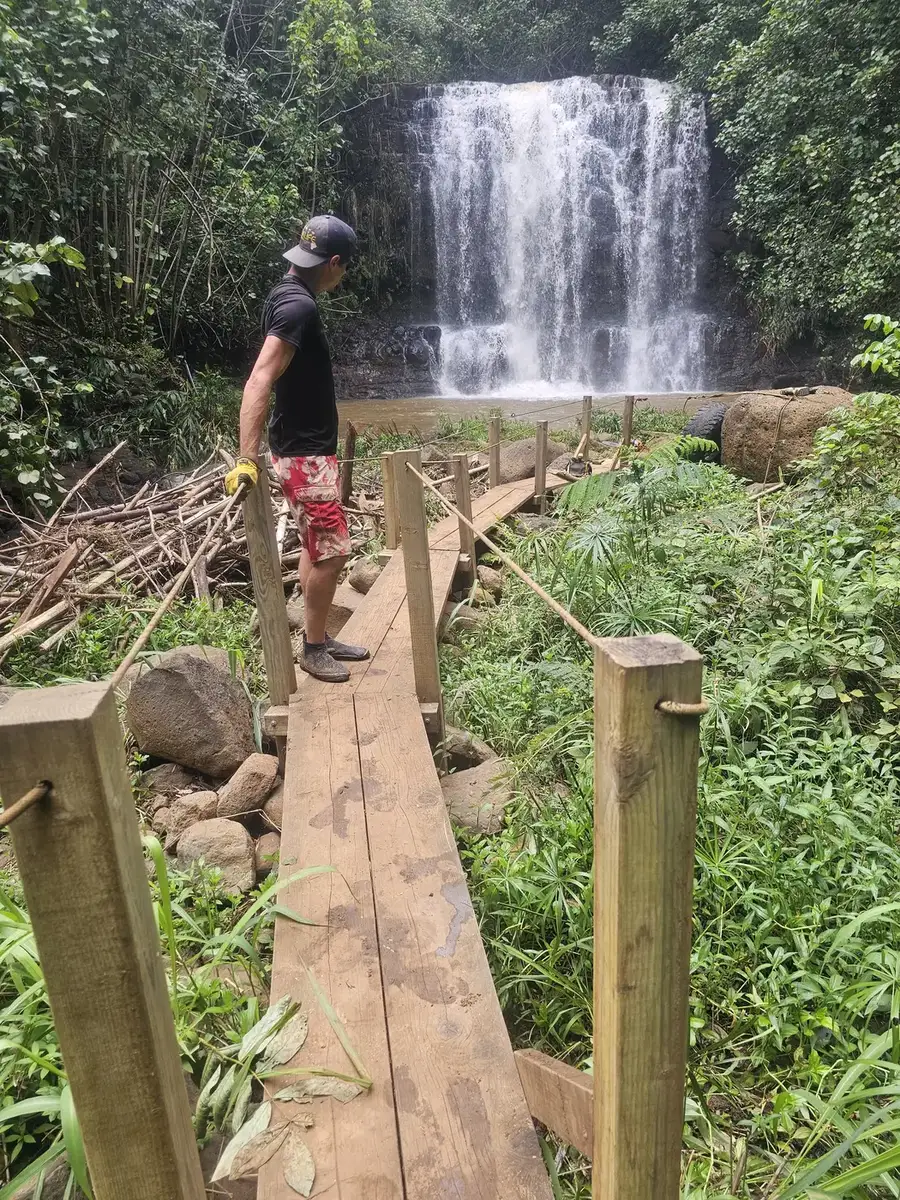
Guide · Trail building
Trail maintenance and building: how to make a trail last
Most trails don't wear out from feet. They wash out from water. Here's how we build and maintain trails that hold up to heavy rain and heavy use, written for landowners, operators and anyone responsible for a path through steep, wet ground.
We've spent years building and rebuilding trails on Kauai, where a single storm can drop more rain in a day than some places get in a month. The lessons below come from that ground: what washed out, what held, and what we'd do differently.
Why trails fail
Water is the number one cause of trail damage. When water runs down a trail instead of across it, it picks up soil and carves a gully. Once a trail becomes a ditch, people walk beside it, the trail widens, and the damage spreads.
- The fall line: trails that run straight downhill turn into streams in every storm.
- No way off: a trail with no grade changes or drains collects water for its whole length.
- Mud holes: people step around them, so the mud grows wider every week.
- Steep, loose soil: on clay slopes, every footstep in the wet pushes soil downhill.
- Neglect: a clogged drain left for one rainy season can undo years of work.
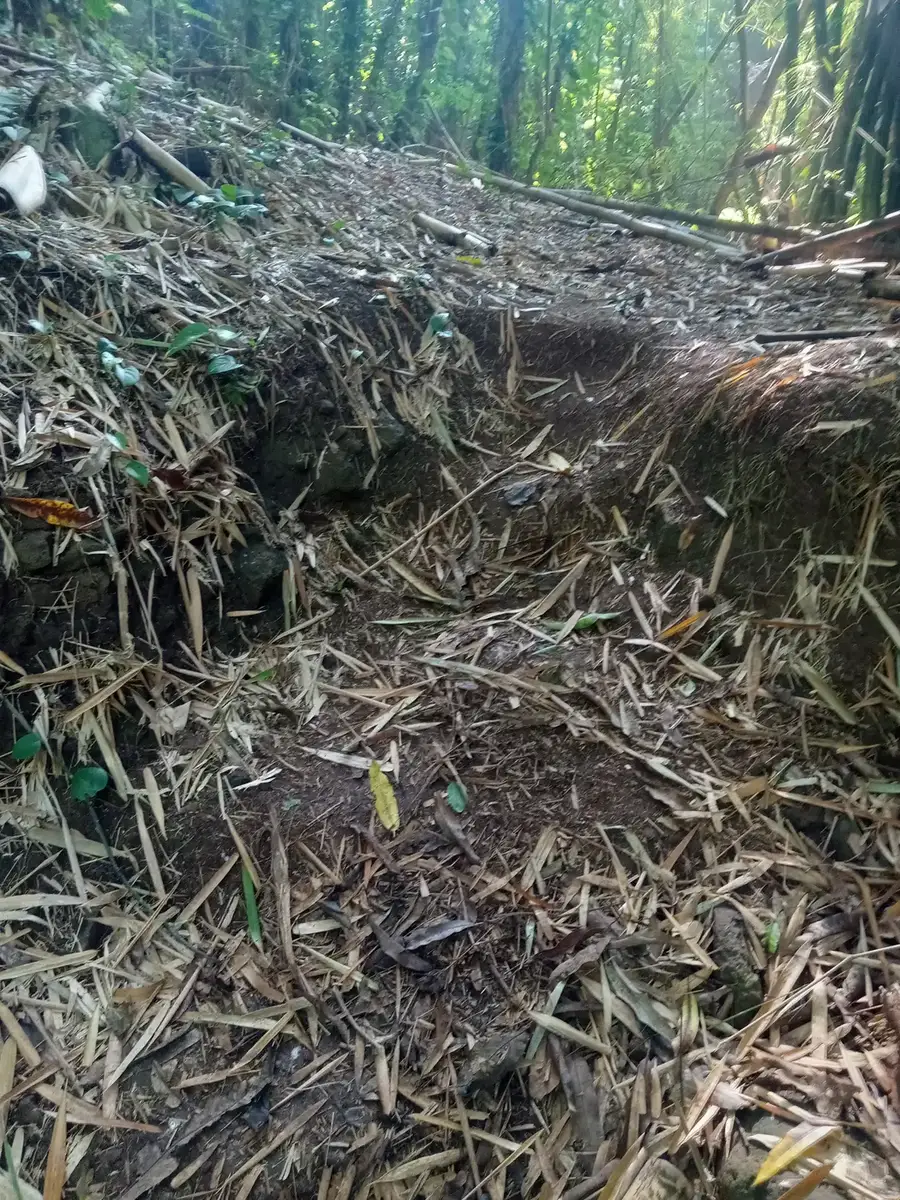 Before
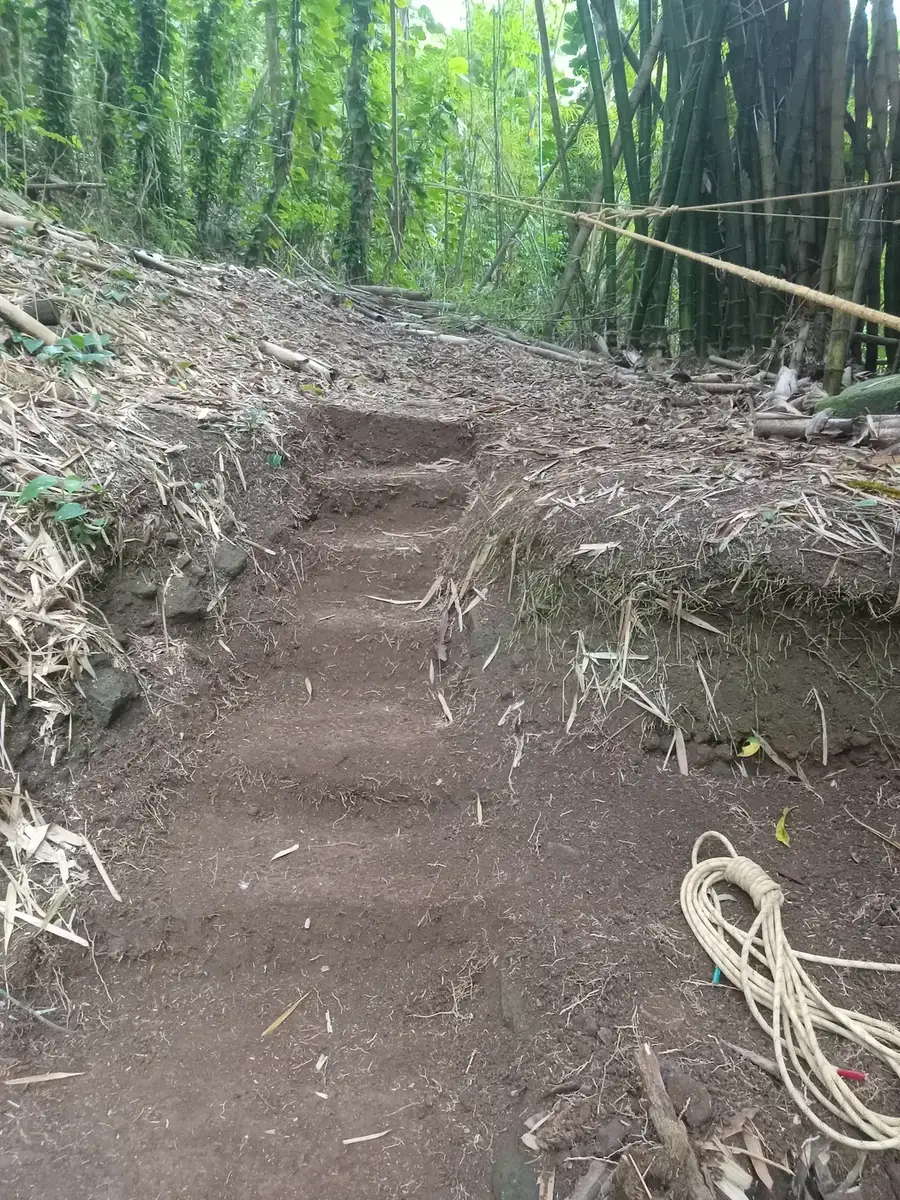 After
AfterLayout: where the trail goes
The cheapest trail to maintain is the one laid out right the first time. A few rules carry most of the weight:
- Follow the contour. Traverse across the slope instead of straight down it, so water can run off the side.
- The half rule: the trail's grade should be no more than half the grade of the hillside it crosses. On a 30% slope, keep the trail under 15%.
- Keep the average grade gentle. Around 10% or less holds up best over time. Short steeper pitches are fine if they're built with steps.
- Build in grade reversals. Small dips where the trail briefly climbs again force water off the tread before it gains speed.
- Plan the destination. Viewpoints, waterfalls and pools draw people off the trail. Give them a durable place to stand, or they'll make their own.
Building the tread
- Flag the line. Walk it in wet weather if you can. Water shows you where it wants to go.
- Clear the corridor. Cut vegetation wide and high enough that people stay on the tread, and remove roots and debris from the path.
- Cut a full bench. Dig the tread into solid soil, not loose fill. Fill on the downhill side settles and slumps.
- Outslope the tread. Tilt it slightly toward the downhill side so water sheets off instead of running along it.
- Compact and armor. Tamp the tread hard, and use rock where the ground never dries.
Steps, bridges and walls
When the ground is too steep or too wet for plain tread, structures do the work:
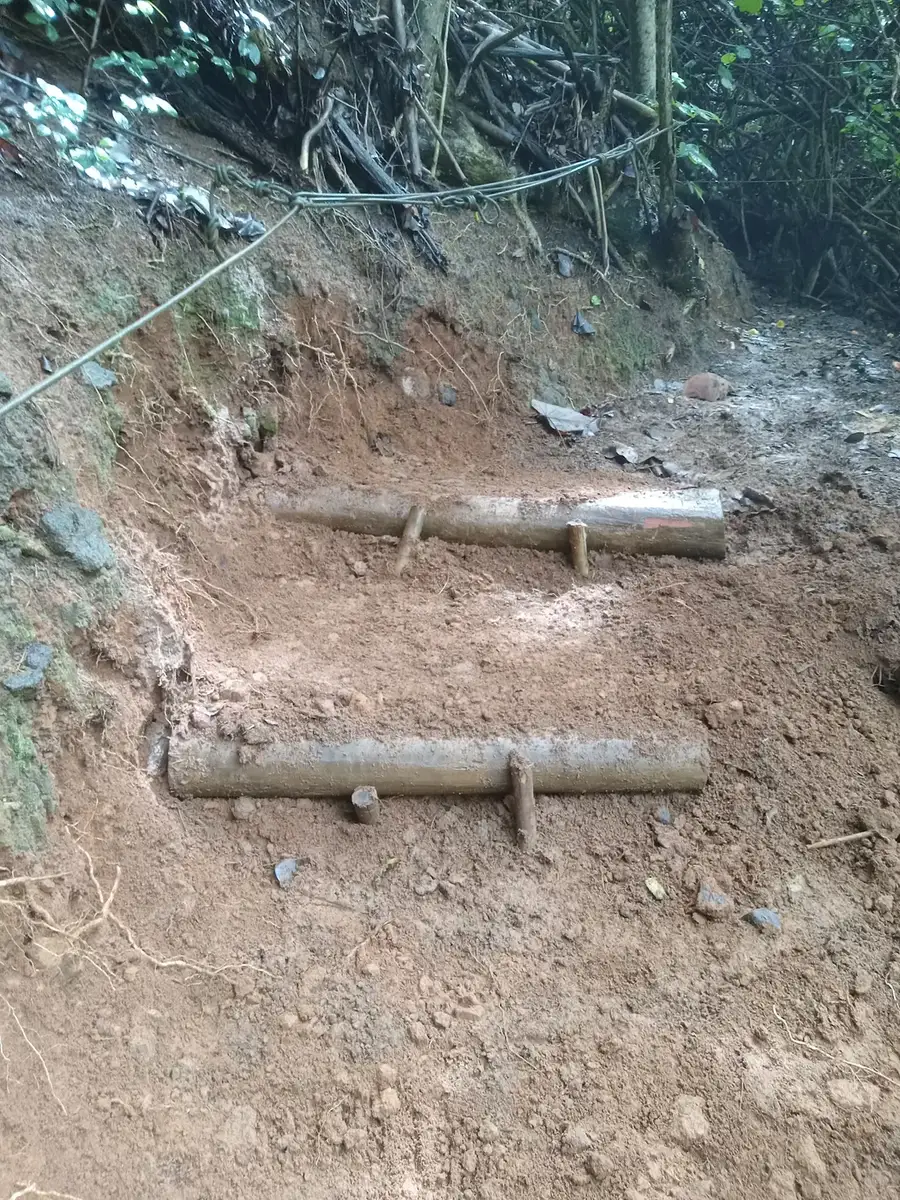
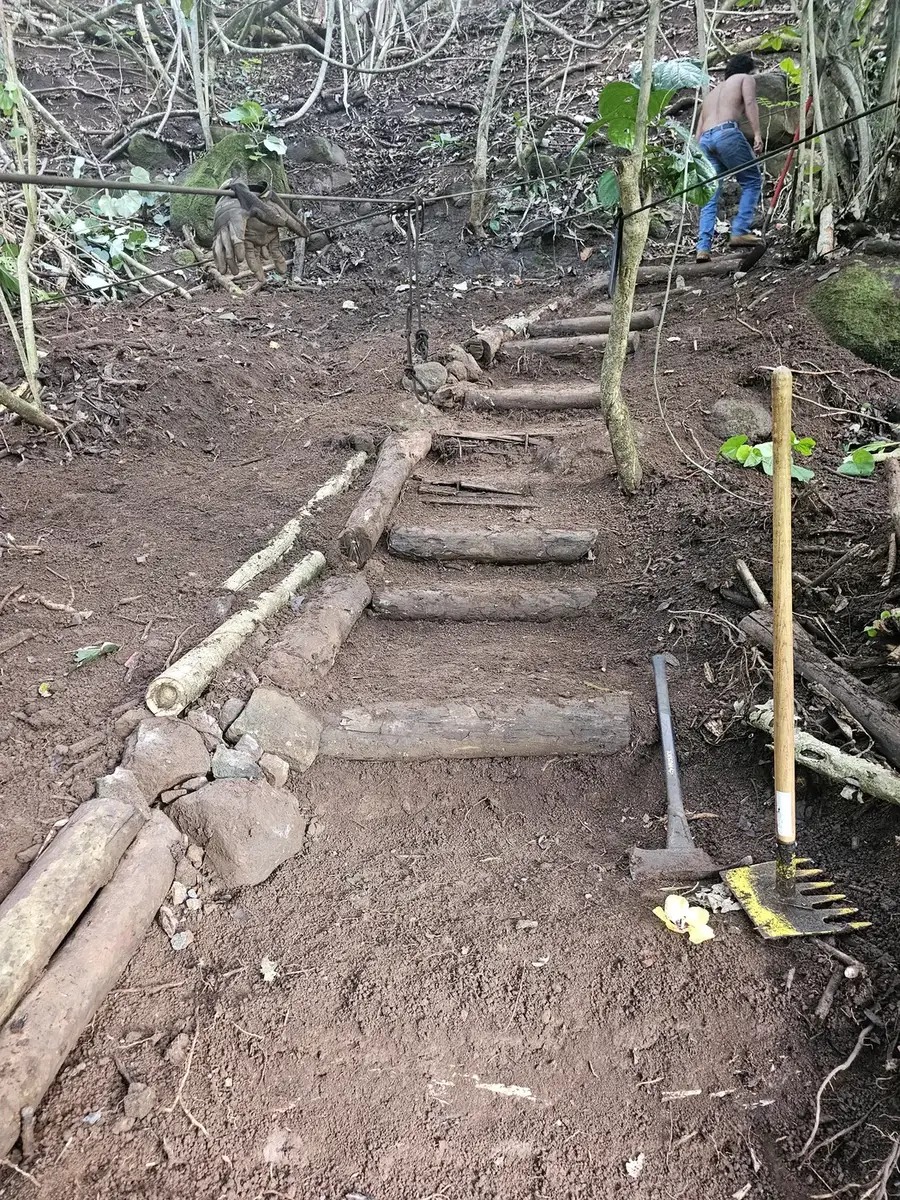
- Log check steps: logs set across the trail and staked in place. Each one holds back soil and breaks a steep pitch into level landings.
- Crib and timber steps: boxed steps filled with compacted soil or gravel. Stronger than single logs on very steep or heavily used sections.
- Rock steps and armoring: the longest-lasting option where rock is available, and the best answer to permanent mud.
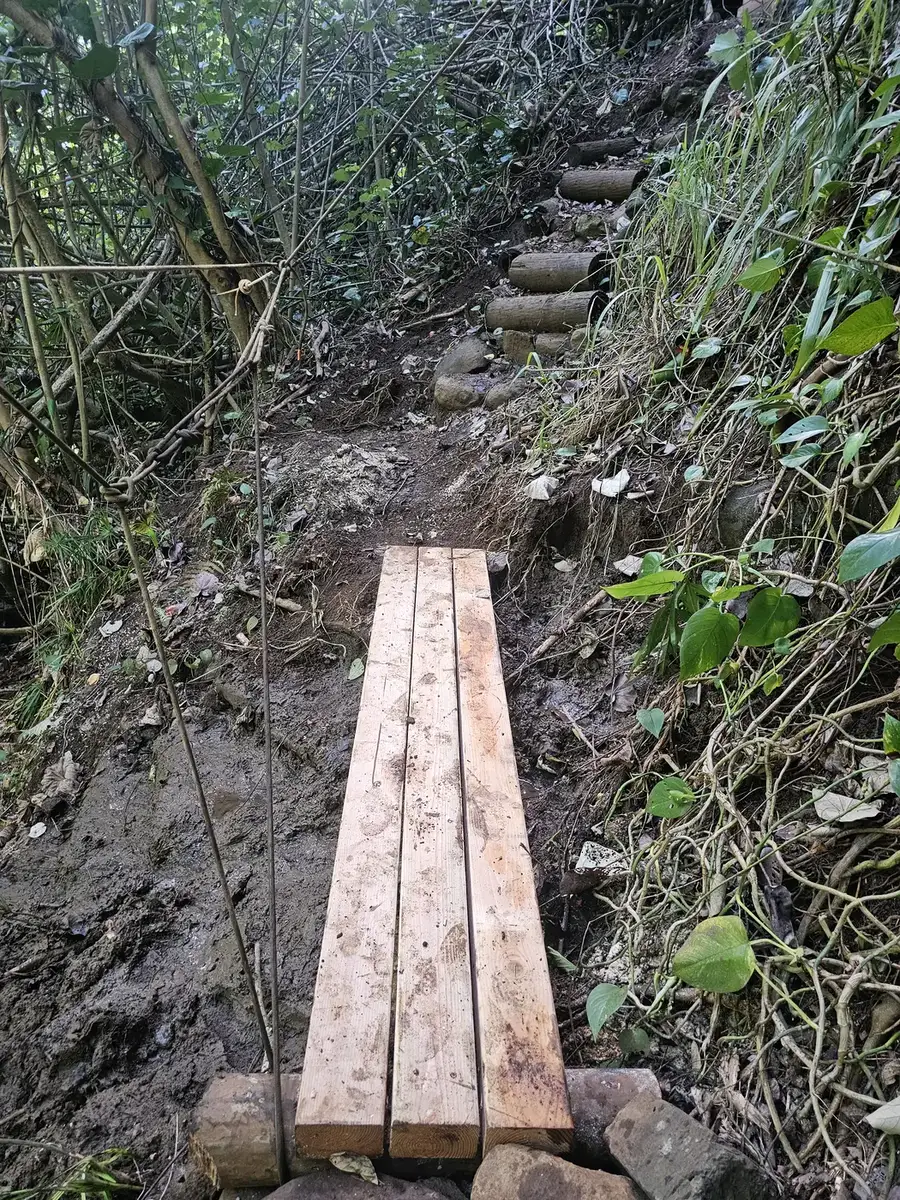
- Bog bridges and boardwalks: planks on sills or posts that carry people over wet ground instead of through it.
- Retaining and crib walls: stacked logs or rock that hold the tread on a slope that's trying to slide.
- Handrails and handlines: on the steepest, slickest sections, so people grab the rail instead of the vegetation.
Steps need the same care as the trail itself: each one has to be dug in deep, staked or anchored, and backfilled tight. A loose step is a trip hazard and a little dam that sends water around its ends.
Drainage
Every structure on a trail is either moving water or getting damaged by it. The main tools:
- Drain dips: shallow, rolling dips that turn water off the trail. Low maintenance and easy to walk over.
- Water bars: a log, rock or timber set at an angle across the trail to deflect water off the side. They need cleaning to keep working.
- Ditches and culverts: for trails that cross a natural water path. Size them for the biggest storm, not the average day.
- Check dams: small barriers in a gully that slow the water and trap soil.
- Armored outlets: rock where water leaves the trail, so the drain doesn't just carve a new gully off the side.
A maintenance schedule
A trail is never finished. Short, regular maintenance costs a fraction of a rebuild:
| When | What to check and do |
|---|---|
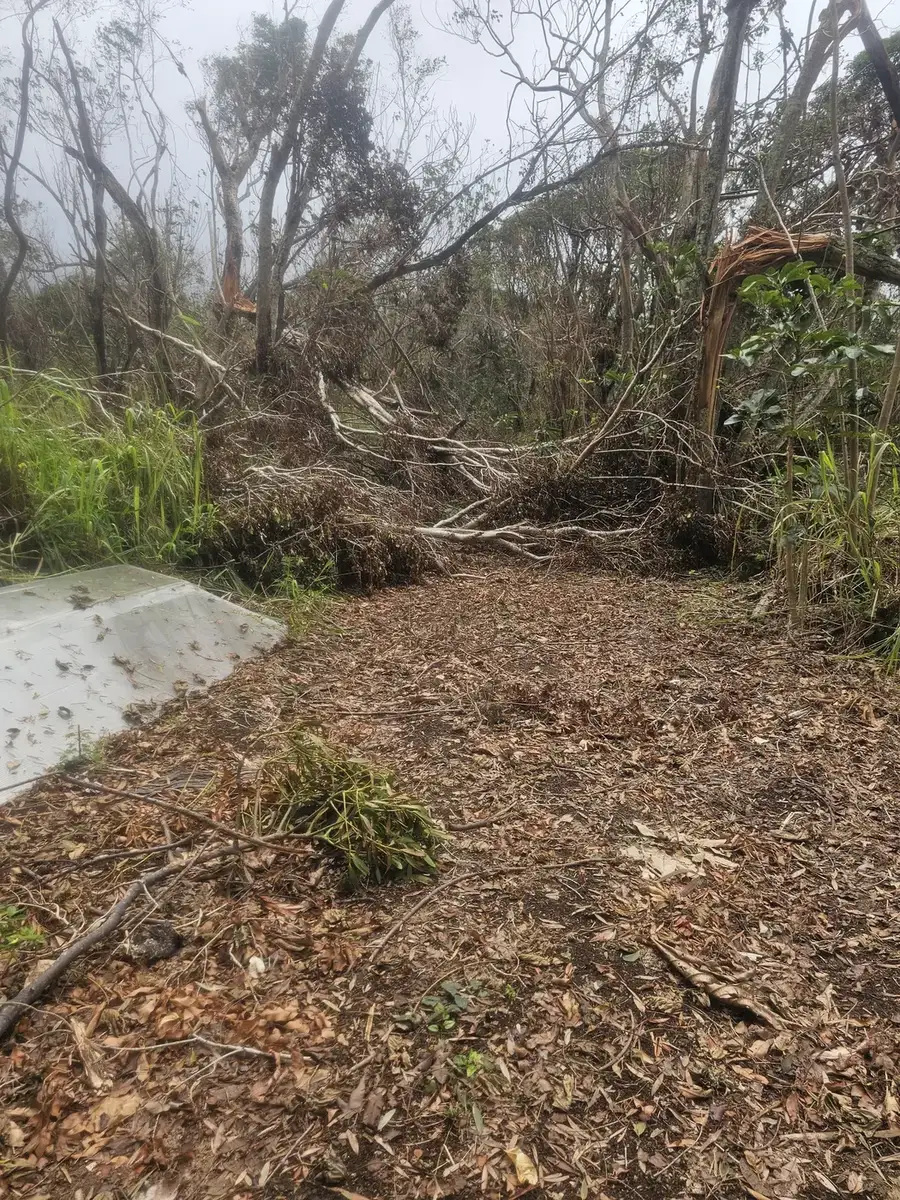
| After every big storm | Clear fallen trees and debris, clean drains and water bars, look for washouts, slides and undercut steps |
| Monthly | Walk the whole trail. Trim the corridor, fill new ruts, re-tamp loose tread, check rails and bridges |
| Every few months | Re-stake and backfill loose steps, replace worn planks, re-armor mud spots |
| Yearly | Full inspection with notes and photos. Replace rotting wood, rebuild failing sections, review drainage before the wet season |
Keep a simple log: date, what you found, what you fixed. It shows patterns (the same drain clogging every month) and it's the record your insurer will want to see if someone gets hurt.
Building in wet, tropical ground
Hawaii and other wet tropical sites break a lot of mainland rules:
- Rain: plan drainage for downpours, not drizzle. If a drain looks oversized in the dry season, it's probably right.
- Red clay: slick when wet and quick to erode. Armor heavily used sections with rock and keep water off the tread at all costs.
- Fast growth: vegetation can close a corridor in weeks. Budget for frequent trimming.
- Wood rots fast: use rot-resistant or treated lumber for steps and bridges, and expect to replace it sooner than you would on the mainland.
- Bamboo: it falls, it spreads, and it splits into sharp edges. Clear it fully from the corridor.
- Protect the forest: clean boots, tools and gear between sites to avoid spreading invasive plants and diseases like Rapid ʻŌhiʻa Death.
Working safely
Trail work is real construction, often on steep, slippery ground and far from help:
- The right tools: a McLeod, a pick mattock, loppers, a pry bar and a tamper do most of the work. Chainsaws need trained operators and full protective gear.
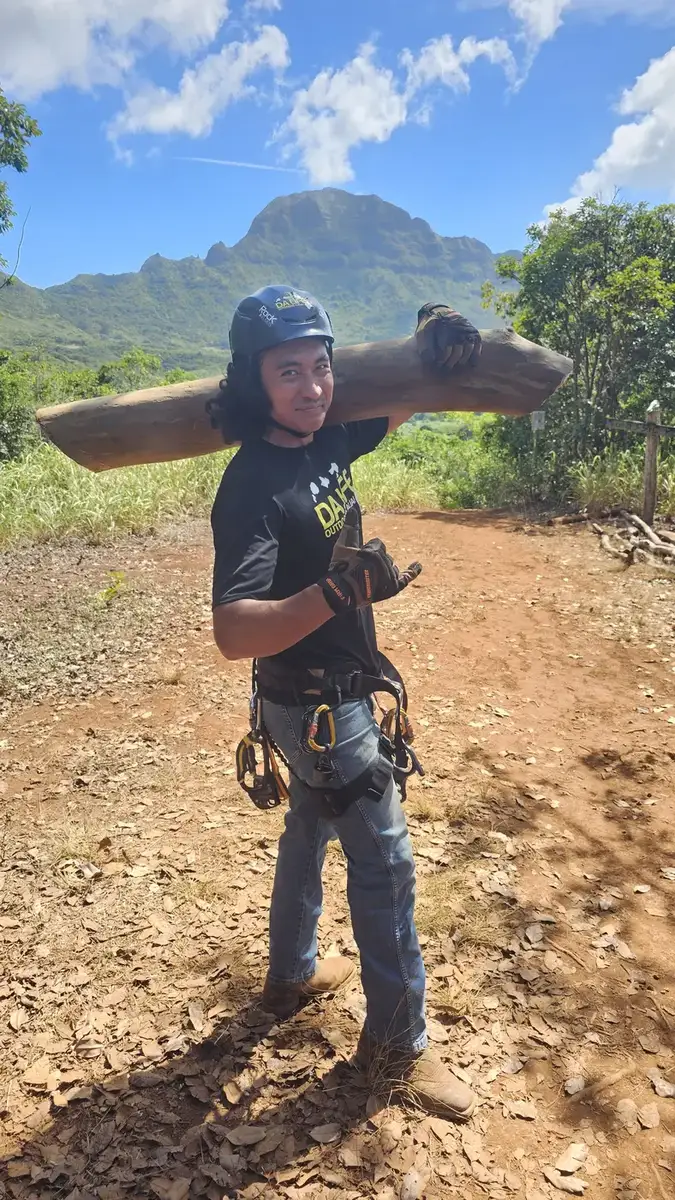
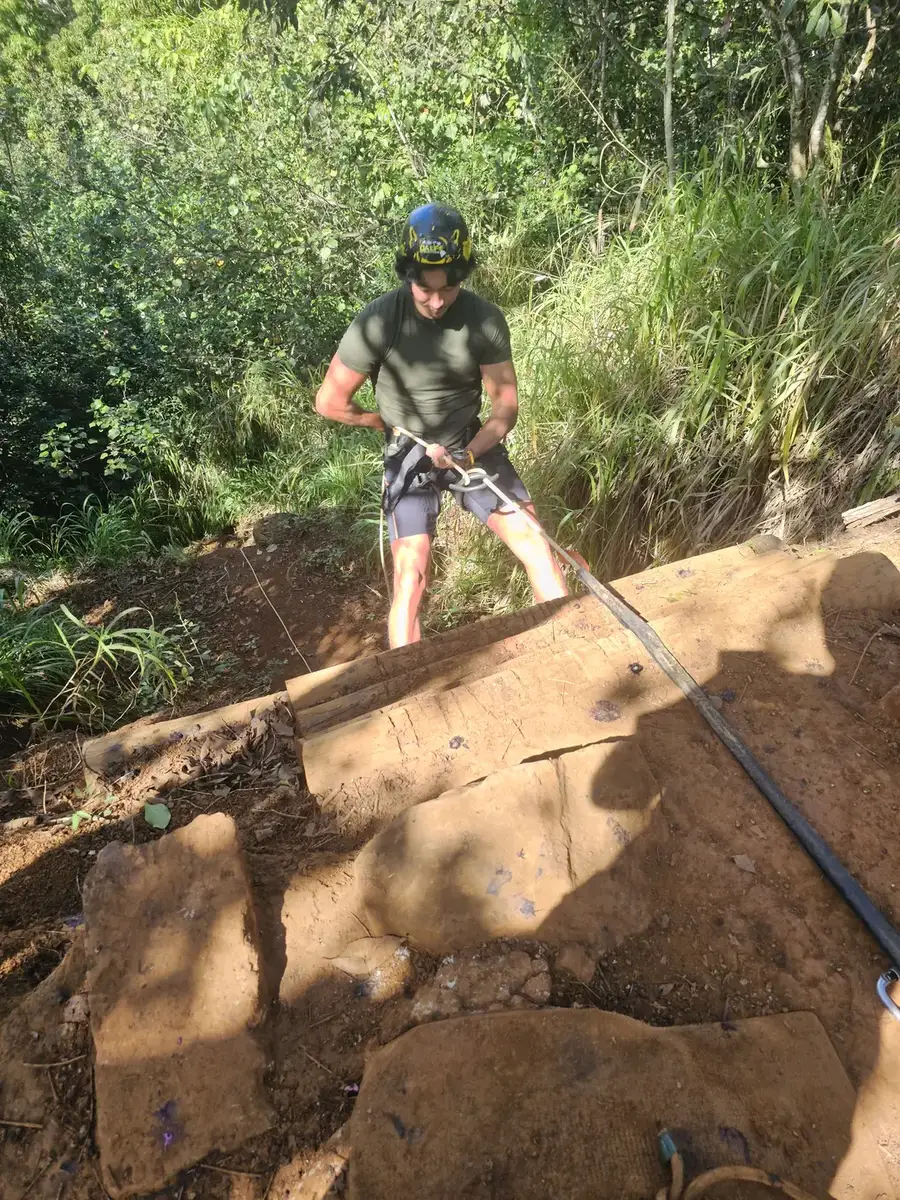
- Rope on steep ground: on high banks and above drops, crews work tied in with a harness and an anchor, just like on a rappel.
- Moving heavy material: use rigging and teamwork for logs and rock instead of backs.
- First aid and a plan: a kit, someone trained in wilderness first aid, and a way to call for help.
- Close the trail: keep visitors off sections under construction.
When to bring in help
Plenty of maintenance is a good weekend project. Bring in experienced builders when:
- the trail serves paying guests or the public, and safety and liability matter;
- the ground is steep enough that crews need rope;
- you need bridges, boardwalks, retaining walls or long staircases;
- sections keep washing out no matter how often you fix them;
- you're planning a new trail and want it laid out right the first time.
That's what we do. Our site and trail development service covers layout, building, drainage and a maintenance plan your team can follow, and you can see past builds on our work page. If your trail leads to a waterfall or a drop, our canyoneering guide and waterfall rappelling guide cover what comes after the trail ends.
Questions
How often does a trail need maintenance?
Walk it monthly and after every big storm, do repairs every few months, and do a full inspection once a year. Wet, busy trails need more; dry, lightly used ones need less.
What's the best material for trail steps in a wet climate?
Rock lasts the longest. Rot-resistant or treated lumber and locally cut logs work well but need replacing sooner. Whatever you use, dig it in deep and stake or anchor it.
How do you stop a trail from eroding?
Get water off the trail: lay it out along the contour, outslope the tread, and add drain dips or water bars before water gains speed. Then armor the spots that stay wet.
Can you build a trail on a very steep slope?
Yes, with switchbacks, steps, retaining walls and handrails. On the steepest ground, crews work on rope. It costs more to build, so good layout matters even more.
Do I need a permit to build a trail on my land?
It depends on where you are, the slope, and whether you're near streams or protected areas. Check with your county and state before you build, especially near water.